


A night scene catches your eye. You like the porch light and the quiet sidewalk, but you’d rather leave a chase scene for another day. The small image shows the porch clearly but the figures at the far end less clearly. When you browse coloring pages for free, keep both parts of that choice in mind. Look for the scene you want, then check for the pictured detail that could change your decision.
1. Name the one thing you want to leave out
“I want a quiet picture” can mean several things. You might want people going about their evening, a street with nobody on it, or a scene without a particular kind of action. That distinction changes which pictures deserve a closer look.
1.1 Describe something you could point to
Give the concern a visible form. In a neighborhood gathering, you might enjoy figures waving while preferring to skip people lunging or colliding. “A group is shown pursuing someone” gives you something specific to look for. “Too much going on” could apply to storefronts, ornament, a crowd, or a complicated action.
Put the wanted and unwanted details in one sentence. “I’d like a street lit by windows, with people walking or standing.” If a pursuit would change the choice, add it as a separate condition. A drawing can show plenty of people and still fit.
- Keep the setting or feature that first caught your attention.
- Name the visible action or detail you would rather avoid.
- Identify where that detail would appear in the picture.
Imagine Mia choosing a page for a quiet evening. She likes the glowing windows and broad sidewalk, but two figures appear near the edge. Instead of rejecting the picture, she checks whether they are simply walking or whether their positions suggest a chase. The choice stays tied to what the drawing actually shows.
1.2 Decide how much the feature matters today
Imagine two street pictures. One shows walkers moving in the same direction with room between them. Another shows a front figure looking back while two people rush toward them. You may accept the first picture even if you usually prefer fewer people. The second may rule itself out if you want to avoid a chase.
Ask what you would do if the feature were easy to see. Would you set the drawing aside, or would the porch, path, and night sky still appeal? A firm exclusion settles the choice. A preference leaves room to consider the rest of the drawing.
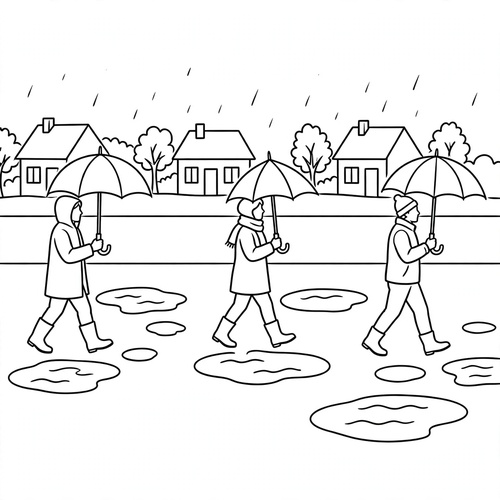
Three people walk apart under umbrellas in the rain
2. Look for the places it could actually appear
Start with the area where the feature would show up. You can study figures along a sidewalk without identifying every line in the sky or every object on the porch. This also helps when reviewing coloring pages for printing, because you can judge the part of the scene that matters before choosing the picture.
2.1 Follow the action past the center
Suppose the porch light and steps give you the scene you wanted. Behind the fence, two people are drawn beside the sidewalk. Notice which way their bodies face, where their feet are going, and whether their attention connects them. A runner could be exercising or hurrying home. A nearby figure could be moving along another path.
Clearer evidence comes from details that work together. A figure looking back while someone behind reaches toward them and follows the same bend can suggest a pursuit. Two people walking side by side suggest something different. The relation matters more than spotting one pair of running shoes.
- Check which direction each figure faces or moves.
- See whether the figures follow the same path or separate routes.
- Read gestures, distance, and attention together before deciding what the action means.
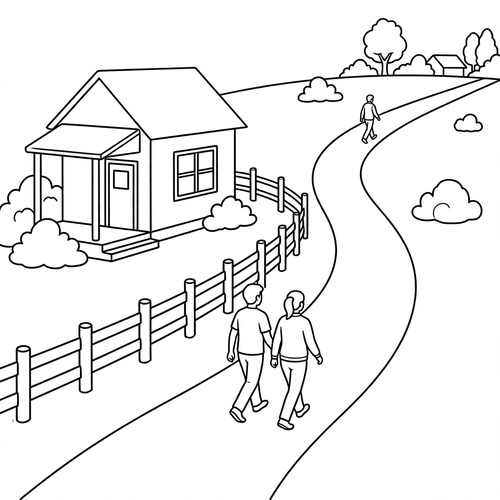
Two walk together as one walks ahead on a curved path
2.2 Separate what you can see from what remains hidden
When the whole sidewalk is visible and empty, the question about those figures is settled for that depiction. The design could still contain another feature you dislike, but you have enough evidence for the current choice. If several clues show the chase you wanted to avoid, set aside the drawing even if the porch is appealing.
A narrow view that cuts off the bend leaves a third possibility: the part that matters is outside the visible area. Look for a more complete view or try another drawing with a readable sidewalk. If the feature is only a mild preference, you might accept the uncertainty. If it would change your decision, choose a design that gives you enough information.
3. Keep what drew you to the picture
Setting one design aside can make the next search easier. You already know something you want to see again. Let that detail guide you when comparing printable coloring pages, so the next choice keeps the appeal without carrying over the feature you wanted to avoid.
3.1 Replace one feature and keep the appeal
Picture a rainy street where umbrellas and puddle reflections catch your attention. A stage and crowd become the focus once you see the complete scene. If you wanted the quiet repetition of umbrellas along a street, try another rainy drawing where ordinary walkers give you those shapes and reflections. The weather and visual rhythm can stay.
Replace the feature at the right level. If the crowd blocks the ground you wanted to see, keep the rain and look for visible pavement. If the stage changes the story more than the crowd does, keep a group of people but look for a different activity. Carry one or two useful features forward.
Daniel and his child set aside a busy festival scene but keep talking about its umbrellas and wet pavement. The next drawing shows four separated walkers with clear puddles between them. They keep the same visual appeal in a calmer scene.
3.2 Make a narrow exception when the rest fits
You might prefer a nearly empty street and still enjoy a drawing with three separated walkers. If each umbrella has a distinct shape and the path remains easy to follow, the picture keeps the open feeling behind your preference. The spacing gives you a concrete reason to accept the extra figures.
Use a different response when a feature takes away what you came for. If reflections are essential and the walkers cover every puddle, three people can be too many. “I can see enough of the reflections between the walkers” explains an exception more clearly than “I’m sure it’ll be fine.” If you still want the lost feature, keep it as the reason you move on.
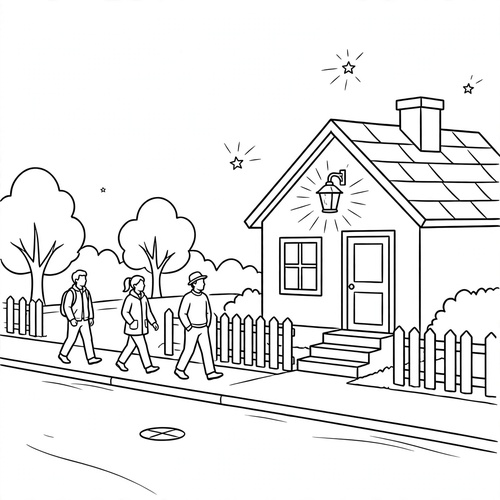
Three people walk calmly past a house on a quiet night
4. Use the individual coloring pages to make your call
ColoringPagesCreative gives you a few ways into the selection, including theme navigation and search from the homepage. Start with the subject or setting you still want. Open an individual drawing and look at the part that answers your question, such as figures at the edge of a street. If that area is unclear, keep the candidate open and try another route through ColoringPagesCreative.
4.1 Use the positive cue to decide where to look
Weather, setting, and activity give you useful starting points. A rainy street may lead closer to the umbrella-and-puddle arrangement than a search built only around avoiding an event. Once you have a candidate, ask two questions. Can you see the feature that drew you in? Can you see where an unwanted detail might appear? The answers tell you whether the picture is ready to choose.
4.2 Leave with a drawing or a specific open question
A clearly visible sidewalk with nobody on it can settle the original porch example. If the path disappears behind the fence, check another night scene with room to see. When you find an artwork that fits, check any preparation information relevant to how you plan to use the resource. Keep today’s reason for choosing as specific as the picture itself.
Choose one feature you want in the picture and one you want to leave out. Inspect the place where the unwanted feature would show up, then make the selection once the distinction is visible.
Read More:
Coloring Pages For Screen Free Evenings Filled With Imagination
Coloring Pages For Classroom Moments Filled With Calm And Imagination

 English
 French
 Spanish
 Portuguese
 Deutsch
 Turkish
 Dutch
 Italiano
 Russian
 Romaian
 Portuguese (Brazil)
 Greek