


A driveway plays an important role in the appearance and function of a property. It provides a stable surface for vehicles, creates access to garages and parking areas, and connects the street with the property entrance. A properly installed concrete driveway can improve convenience while adding a clean and organized appearance to the outdoor space.
Concrete remains a popular driveway material because it offers strength, durability, and different design possibilities. Property owners can choose from standard concrete finishes, decorative textures, and other surface options based on their preferences.
However, a successful concrete driveway installation requires careful planning and preparation. Soil conditions, grading, drainage, concrete thickness, reinforcement, and curing all affect the finished surface. Professional installation helps ensure that the driveway meets the property's practical requirements.
Why Concrete Is a Popular Driveway Material?
Concrete offers several benefits for residential and commercial driveways. Its hard surface supports regular vehicle traffic and provides a stable area for parking.
Unlike loose gravel, concrete does not require frequent spreading or leveling. It also creates a smooth surface that makes walking and vehicle movement easier.
Another advantage involves design flexibility. Property owners can select different finishes and colors to complement the building's exterior.
Concrete driveways can also support larger vehicles when the design, thickness, base, and reinforcement match the expected loads. Commercial properties may require additional planning because delivery vehicles and frequent traffic place greater demands on the surface.
Planning a New Concrete Driveway
The planning stage helps determine the driveway's dimensions, layout, and construction requirements. Contractors inspect the property and consider the available space, existing surfaces, slope, soil conditions, and access points.
The driveway width should allow comfortable vehicle movement. Properties with multiple vehicles may need additional parking space or a wider entrance.
The design should also consider nearby landscaping, garage access, sidewalks, gates, and property boundaries.
Drainage needs attention during planning. Water should move away from buildings and avoid collecting in low areas. The driveway slope must support proper runoff without making vehicle access difficult.
Removing Existing Driveway Materials
A replacement project may require removing old concrete, asphalt, gravel, or other surface materials. Contractors begin by examining the existing driveway and identifying damaged sections.
Heavy equipment may be necessary to break up and remove old concrete. The team clears the area and prepares it for the new base.
During removal, contractors should check for underground utilities and existing drainage systems. Proper planning helps prevent damage to important property features.
After clearing the area, the installation team checks the exposed soil and determines whether additional excavation or stabilization is necessary.
Preparing a Stable Base
The base supports the concrete and helps distribute vehicle weight. Poor base preparation can contribute to uneven settling, cracking, and surface movement.
Contractors grade the soil and remove loose or unsuitable material. They then add the specified aggregate base and compact it evenly.
The required base depth depends on soil conditions, expected traffic, and project specifications. Areas with weak or unstable soil may need additional preparation.
Proper compaction creates a more consistent foundation. The surface should also maintain the planned slope so water can drain away from the driveway.
Setting Forms and Reinforcement
Forms define the shape and edges of the new concrete driveway installaion service. Contractors position them according to the planned dimensions and check that they remain secure.
Reinforcement may also be included depending on the design and expected loads. Steel reinforcement or suitable mesh can help manage stresses within the concrete.
However, reinforcement does not eliminate the possibility of cracking. Proper base preparation, concrete placement, joint planning, and curing remain important.
The installation team checks the forms, reinforcement placement, and surface levels before pouring the concrete.
Pouring and Finishing Concrete
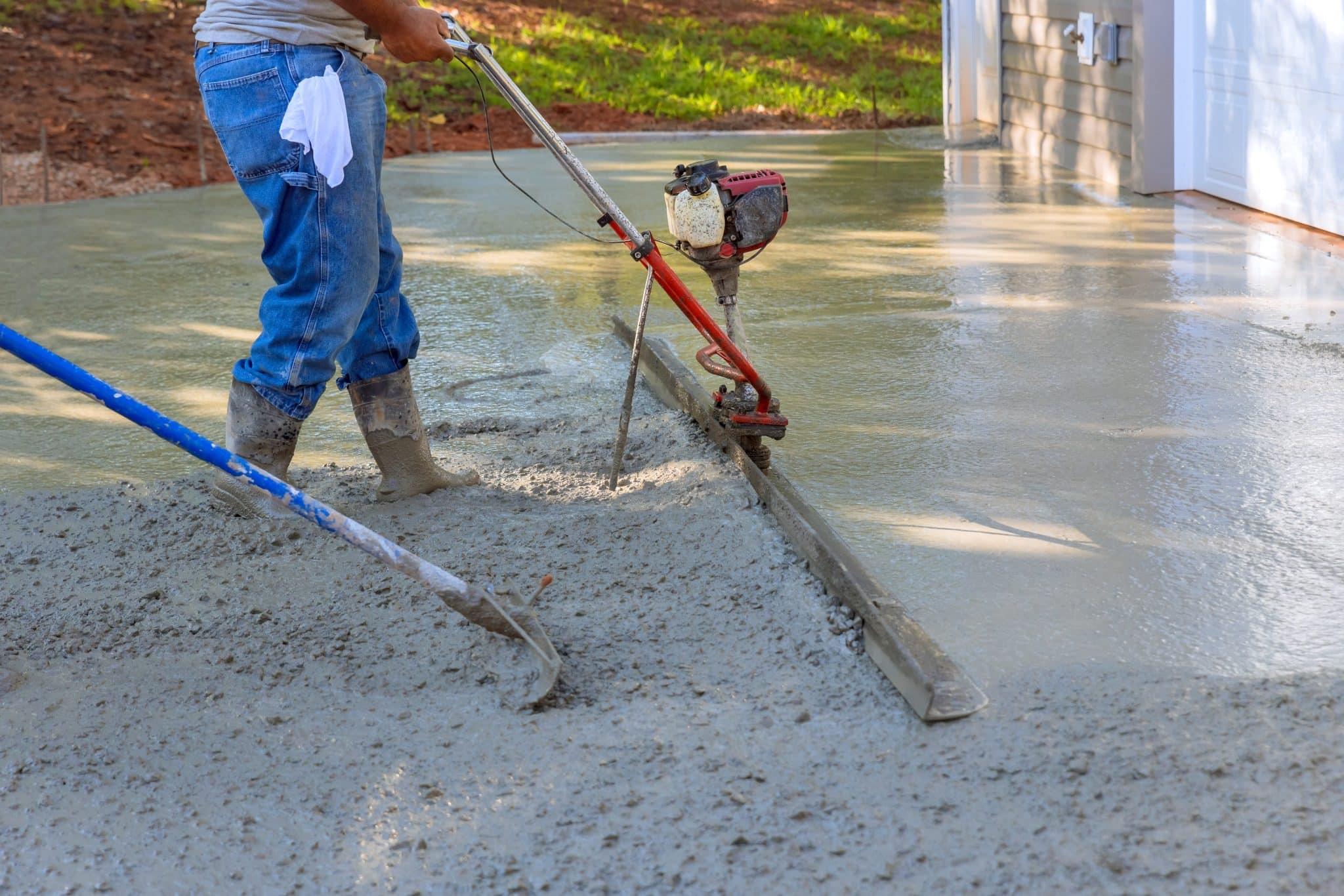
Concrete placement requires proper timing and coordination. The concrete arrives in a workable condition, and the team distributes it across the prepared area.
Contractors spread the material evenly and use suitable tools to establish the correct thickness and level. They then finish the surface according to the selected design.
A standard broom finish provides texture that helps improve traction. Other finishing options can create different appearances for residential properties.
Decorative finishes may include stamped patterns or colored concrete. Property owners should select finishes that match their design preferences and intended use.
Control Joints and Crack Management
Concrete naturally changes size as temperature and moisture conditions change. These movements can create cracks if the slab does not have suitable control joints.
Contractors plan joints to encourage cracking at selected locations rather than allowing random cracks to form across the surface.
Joint placement depends on slab dimensions, thickness, and design. Construction joints may also be necessary where separate concrete sections meet.
Proper joint planning improves the appearance and performance of the finished driveway.
Concrete Curing and Initial Protection
Curing allows concrete to develop strength by maintaining suitable moisture and temperature conditions. This stage is essential after the finishing work.
The contractor follows an appropriate curing method based on the concrete mix and weather conditions. Property owners should keep vehicles and heavy loads off the driveway until the contractor confirms that it is ready for use.
Walking access and vehicle access may have different waiting periods. The exact timing depends on the concrete mix, weather, thickness, and project specifications.
Allowing sufficient curing time helps protect the new surface from early damage.
Concrete Driveway Maintenance
Concrete driveways need routine cleaning and occasional inspection. Leaves, dirt, oil, and other stains should be removed before they become difficult to clean.
Property owners should avoid using unsuitable chemicals or equipment that can damage the finish. A suitable cleaning method depends on the surface treatment.
Sealing may help protect certain concrete finishes against moisture and stains. However, the right sealer and application schedule depend on the concrete type and manufacturer's recommendations.
Cracks and damaged joints should receive attention when they appear. Early assessment helps determine whether a repair is needed.
Concrete Driveway Installation for Commercial Properties
Commercial driveways often experience heavier traffic than residential surfaces. Businesses may need areas for customer parking, employee vehicles, delivery access, and loading activities.
The concrete design should account for vehicle weight, traffic frequency, soil conditions, and drainage requirements.
Large parking areas may also need clearly planned sections, suitable slopes, and control joints. Proper construction helps create an organized surface for daily business operations.
Conclusion
Concrete driveway installation provides property owners with a durable and practical surface for parking and vehicle access. Proper planning, soil preparation, base compaction, reinforcement, finishing, and curing all contribute to a successful project. Regular cleaning and timely maintenance help preserve the driveway's condition. Peralta's Landscaping is the best company for concrete driveway installation in Oxnard, CA, and its surrounding areas. The company provides outdoor improvement services that help residential and commercial property owners maintain attractive and functional spaces.
Frequently Asked Questions
1. How long does concrete driveway installation take?
The timeline depends on driveway size, excavation, base preparation, weather, and finishing requirements. Curing also adds time before the surface can handle normal use.
2. How long does a concrete driveway last?
A properly installed and maintained concrete driveway can last for many years. Soil conditions, traffic, weather, drainage, and maintenance affect its lifespan.
3. Can I park on a new concrete driveway immediately?
No. Fresh concrete needs sufficient curing time before it can handle vehicle traffic. Follow the contractor's instructions before parking on it.
4. Does a concrete driveway need reinforcement?
Some driveways benefit from reinforcement based on their design and expected loads. The contractor determines suitable reinforcement for the project.
5. Can concrete driveways have decorative finishes?
Yes. Options include broom finishes, stamped patterns, and colored concrete. The selected finish should suit the property's appearance and intended use.
6. How do I maintain a concrete driveway?
Regular cleaning, drainage checks, joint inspections, and suitable sealing help maintain its condition.

 English
 French
 Spanish
 Portuguese
 Deutsch
 Turkish
 Dutch
 Italiano
 Russian
 Romaian
 Portuguese (Brazil)
 Greek