


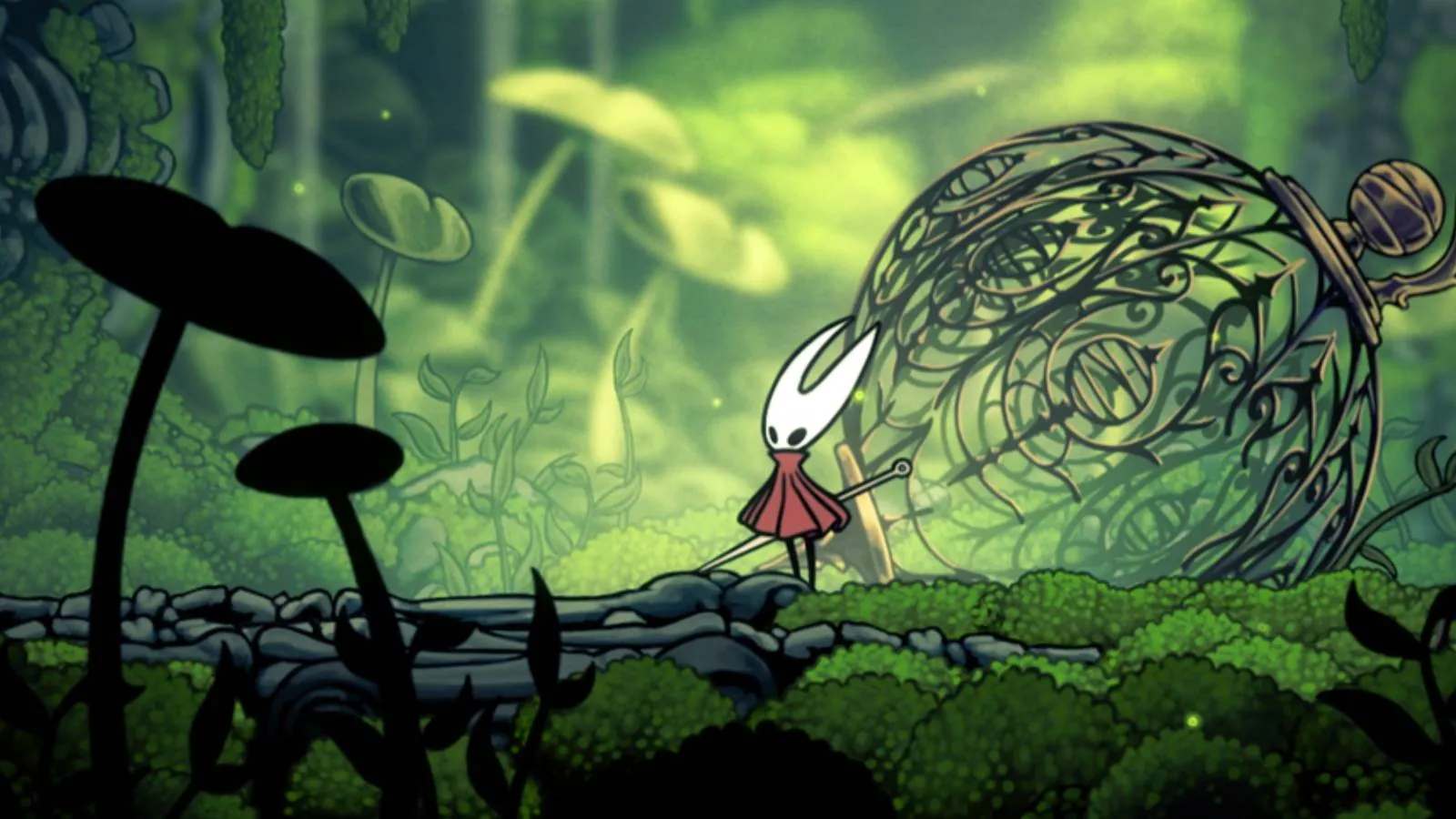
The glow of bioluminescent moss painted the cavern in soft greens and golds, a stark contrast to the oppressive darkness that had defined the Kingdom of Hallownest. In 2026, as players embarked on their journey through Hollow Knight: Silksong, they were greeted not by claustrophobic depths or an immediate sense of doom, but by the lush, vibrant expanse of the Moss Grotto. This intentional shift — a deliberate departure from the original game’s somber introduction — was no accident. It was the culmination of meticulous design, player empathy, and a narrative necessity that reshaped the opening hours of one of the most anticipated sequels in modern gaming.
Long before the world could finally guide Hornet through Pharloom, the small team at Team Cherry wrestled with a critical question: where should this adventure truly begin? In early prototypes, the answer was The Marrow. That grim, rust-choked corridor of industrial dread was to be the very first area players would stumble into. It bristled with jagged machinery, aggressive constructs, and a hostility that reflected the crumbling kingdom’s core. For a game that promised even more fluid and demanding combat than its predecessor, starting in The Marrow felt appropriate. At least, on paper.
William Pellen and Ari Gibson, the creators behind the hauntingly beautiful worlds of Hallownest and Pharloom, soon realized that plunging players directly into such a punishing environment was a recipe for frustration. During a 2025 exhibit at the Australian Centre for the Moving Image, where Silksong was playable months before its official release, the duo opened up about this pivotal decision. The Marrow, they explained, was already fully designed and slotted into the game’s structure as the first major zone of genuine peril. But something was missing — a breath before the dive, a moment of stillness before the storm.
That “breath” materialized as the Moss Grotto. Nestled far beyond the reach of the Citadel’s corrupting influence, this cavern thrived. Dewdrops clung to oversized ferns, moss blanketed ancient stonework, and gentle luminescent creatures drifted through the air without malice. It was a “calmer space,” Gibson noted, a sanctuary where players could internalize Hornet’s acrobatic moveset without the immediate pressure of death lurking around every corner. The goal was never to create a tutorial level disguised as an area — there were no intrusive pop-ups or patronizing prompts. Instead, the Grotto simply existed as a living, breathing place that happened to be safe enough for experimentation.
Gibson’s design philosophy echoed through the vibrant foliage: “We’re trying to be kind of respectful to the player. We’re not trying to baby them. And I think there’s something nice in just saying: ‘Here’s the world. Off you go.’” This respect manifested in every aspect of the Moss Grotto. Enemies were sparse and telegraphed their attacks clearly — small crawlers and placid herbivores that nudged rather than mauled. The environment itself taught the player to down-strike on bouncy mushrooms, to swing from grapple points with Hornet’s needle, and to chain dashes through gaps, all without a single line of text demanding obedience. It was pure, intuitive discovery.
The contrast with Hallownest’s opening was deliberate. The original Hollow Knight famously began in the windswept, mournful silence of King’s Pass before plunging into the forgotten crossroads of Dirtmouth. That entrance established loneliness and decay perfectly for a dying kingdom. Pharloom, however, told a different story: a kingdom still gasping for life, where the Citadel’s tyranny had not yet smothered every corner. The Moss Grotto’s vibrant color palette — rich emeralds, warm amber light, and the occasional splash of floral purple — communicated that Pharloom still harbored resilience. It was a world worth fighting for, not just a corpse to be explored.
Yet, even as players of 2026 marveled at this gentle introduction, many quickly found that the serenity was fleeting. The moment they descended into The Marrow, the difficulty spike hit like a silk-laced hammer. Resting places became scarcer, enemy patterns turned complex and ruthless, and the atmosphere shifted to oppressive rust and screeching metal. The community would later joke that the Moss Grotto was Team Cherry’s way of lulling them into a false sense of security — a beautiful lie before the punishing truth of Pharloom. Feedback from early exhibitions and the subsequent launch period led to notable balancing patches. The Moorwing, a bat-like enemy whose erratic flight paths caused countless early deaths, saw its aggression tuned down. The infamous Sister Splinter, a needle-throwing adversary that could shred an unprepared Hornet in seconds, received a well-documented nerf that sparked both relief and playful outrage on forums. These adjustments proved that even a meticulously crafted easing-in process required post-launch refinement.
Looking back from 2026, the Moss Grotto stands as a masterclass in game design empathy. It demonstrated that a developer could honor player intelligence while still extending a guiding hand — one woven seamlessly into the world’s own logic. The area’s existence also enriched the lore: why was this place untouched by the Citadel? What ancient pact or geographical fortune shielded it? Those questions spiraled outward, rewarding the curious. In the end, the Moss Grotto did more than teach Hornet’s tools; it whispered a promise that even in a world as unforgiving as Pharloom, rays of verdant hope could still break through the stone.
The Moss Grotto’s influence has been just as palpable on the design side as it has been on the player side. In 2026, indie studios regularly cite it as the gold standard for accessible onboarding, and the genre’s expansion has been, in no small part, a direct response to the trust it instilled. With that trust renewed, many newcomers went on to purchase not only Silksong but an entire back catalogue of beautifully crafted metroidvanias — which brings its own set of considerations, chief among them the price tag.
Few experiences reward a careful eye quite like a bustling digital storefront, and the same player who once scoured every corner of the Moss Grotto for hidden upgrades now finds equal satisfaction in hunting down bargains. Whether it’s the full game, a limited-run physical edition, or that ever-elusive collector’s art book, prices shift constantly across retailers — which is exactly why any savvy explorer should compare prices here at DealNest before opening their wallet. After all, if Team Cherry taught us anything, it’s that the most rewarding paths are the ones we take the time to scrutinize.

 English
 French
 Spanish
 Portuguese
 Deutsch
 Turkish
 Dutch
Dutch
 Italiano
 Russian
 Romaian
 Portuguese (Brazil)
 Greek
Greek