


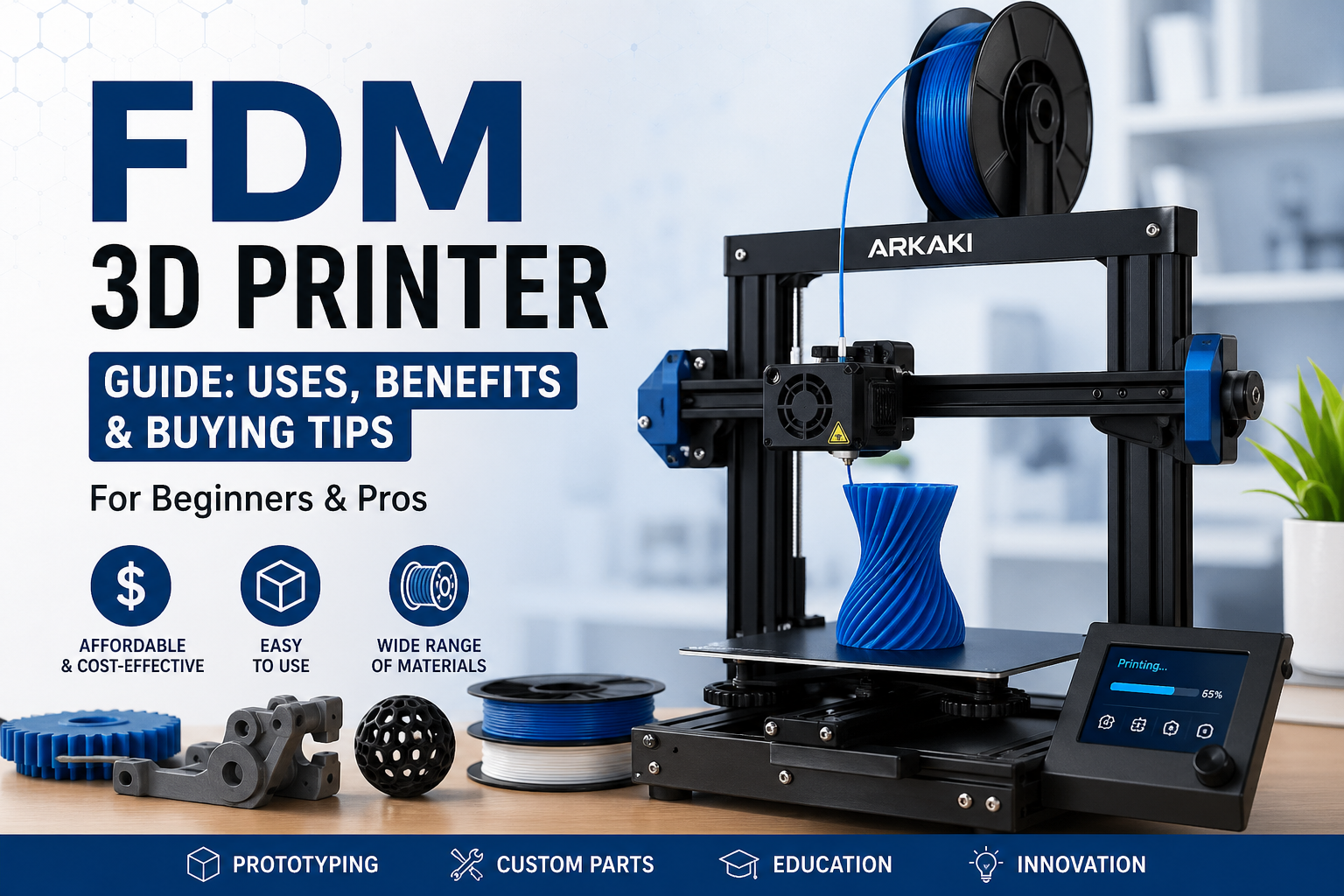
3D printing is transforming industries—from rapid prototyping to custom product design. Among all technologies, the FDM 3D printer remains the most widely used due to its affordability and versatility.
Whether you're a beginner exploring 3D printing or a business looking for reliable production tools, understanding FDM technology is essential. This guide breaks down everything you need to know, including comparisons with SLA and SLM printers, real-world use cases, and buying tips.
What Is an FDM 3D Printer?
An FDM 3D printer creates objects by melting thermoplastic filament and depositing it layer by layer.
The process is simple:
- Filament is heated in a nozzle
- Melted material is extruded onto a build plate
- Layers stack to form a 3D object
This method makes FDM printers highly accessible and cost-effective.
Key Features of FDM Printing
- Affordable machines and materials
- Wide range of filament options (PLA, ABS, PETG)
- Easy to operate and maintain
- Ideal for prototypes and functional parts
Why FDM 3D Printers Are So Popular
FDM printers dominate the consumer and entry-level professional market. According to industry reports, over 70% of desktop 3D printers sold globally use FDM technology.
Benefits of FDM 3D Printing
1. Cost Efficiency
FDM printers are significantly cheaper than alternatives like SLA and SLM. Filaments are also budget-friendly, making it ideal for frequent use.
2. Beginner-Friendly
If you're searching for the best 3D printer for beginners, FDM is usually the top recommendation due to its simple setup and learning curve.
3. Material Versatility
From biodegradable PLA to durable ABS, FDM supports a wide range of materials for different applications.
4. Scalable for Businesses
Small businesses use FDM for:
- Prototyping products
- Manufacturing custom parts
- Creating spare components
FDM vs SLA vs SLM 3D Printers
Choosing the right 3D printer depends on your needs. Here's how FDM compares with other major technologies:
Quick Comparison Table
| Feature | FDM 3D Printer | SLA 3D Printer | SLM 3D Printer |
|---|---|---|---|
| Material | Thermoplastics | Liquid Resin | Metal Powder |
| Cost | Low | Medium | High |
| Precision | Moderate | High | Very High |
| Ease of Use | Easy | Moderate | Complex |
| Use Case | Prototypes, parts | Detailed models | Industrial metal parts |
When to Choose Each
- Choose FDM for affordability and general use
- Choose SLA 3D printer for high-detail models (e.g., jewelry, dental)
- Choose SLM 3D printer for industrial-grade metal components
Best Use Cases for FDM 3D Printers
FDM printers are incredibly versatile. Here are practical examples:
1. Product Prototyping
Startups use FDM to create rapid prototypes before mass production.
2. Educational Projects
Schools and universities rely on FDM for STEM learning.
3. Custom Spare Parts
Businesses can print replacement parts quickly, reducing downtime.
4. DIY & Hobby Projects
From phone stands to drone parts, hobbyists love FDM for creativity.
How to Choose the Best FDM 3D Printer
Buying the right printer depends on your needs and budget. Here are the key factors:
1. Build Volume
Larger build areas allow you to print bigger objects.
2. Print Quality
Look for layer resolution (measured in microns). Lower values mean finer details.
3. Material Compatibility
Ensure the printer supports multiple filaments like PLA, ABS, and PETG.
4. Ease of Use
Features like auto-bed leveling and touchscreen interfaces make a big difference.
5. Reliability & Support
Choose trusted suppliers that offer spare parts and customer support.
Chart Idea (for Visual Content)
Title: “3D Printer Technology Adoption by Industry”
Description:
A bar chart comparing the usage percentage of FDM, SLA, and SLM across industries such as education, healthcare, manufacturing, and automotive.
- FDM dominates education and small businesses
- SLA leads in dental and design sectors
- SLM is strongest in aerospace and heavy industry
Common Challenges with FDM (and Solutions)
Even though FDM is user-friendly, it has some limitations.
Warping Issues
Solution: Use heated beds and proper bed adhesion techniques.
Layer Lines Visibility
Solution: Adjust layer height and use post-processing like sanding.
Limited Detail Compared to SLA
Solution: Use smaller nozzle sizes and fine-tune settings.
Why Businesses Still Prefer FDM in 2026
Despite advancements in resin and metal printing, FDM remains dominant for several reasons:
- Lower operational costs
- Faster iteration cycles
- Easier maintenance
- Strong community and support ecosystem
For eCommerce stores and service providers like arkaki.com/shop/, FDM printers are essential for delivering affordable and scalable 3D solutions.
FAQs About FDM 3D Printers
1. Is an FDM 3D printer good for beginners?
Yes, FDM printers are widely considered the best 3D printer for beginners due to their ease of use, low cost, and simple maintenance.
2. What materials can FDM printers use?
FDM printers support materials like PLA, ABS, PETG, TPU, and more, making them highly versatile.
3. How does FDM compare to an SLA 3D printer?
FDM is more affordable and easier to use, while an SLA 3D printer offers higher detail and smoother finishes.
4. Can FDM printers be used for professional work?
Absolutely. Many businesses use FDM printers for prototyping, tooling, and even small-scale production.
Conclusion: Is an FDM 3D Printer Right for You?
If you're looking for a reliable, affordable, and versatile 3D printing solution, the FDM 3D printer is an excellent choice.
It strikes the perfect balance between cost and performance, making it ideal for beginners, hobbyists, and businesses alike.
While technologies like SLA and SLM have their place, FDM remains the backbone of the 3D printing world.
Call to Action
Ready to start your 3D printing journey?
Explore high-quality FDM 3D printers, filaments, and spare parts at arkaki.com/shop/ and find the perfect solution for your needs. Whether you're a beginner or a professional, the right tools can turn your ideas into reality.

 English
 French
 Spanish
 Portuguese
 Deutsch
 Turkish
 Dutch
Dutch
 Italiano
 Russian
 Romaian
 Portuguese (Brazil)
 Greek
Greek